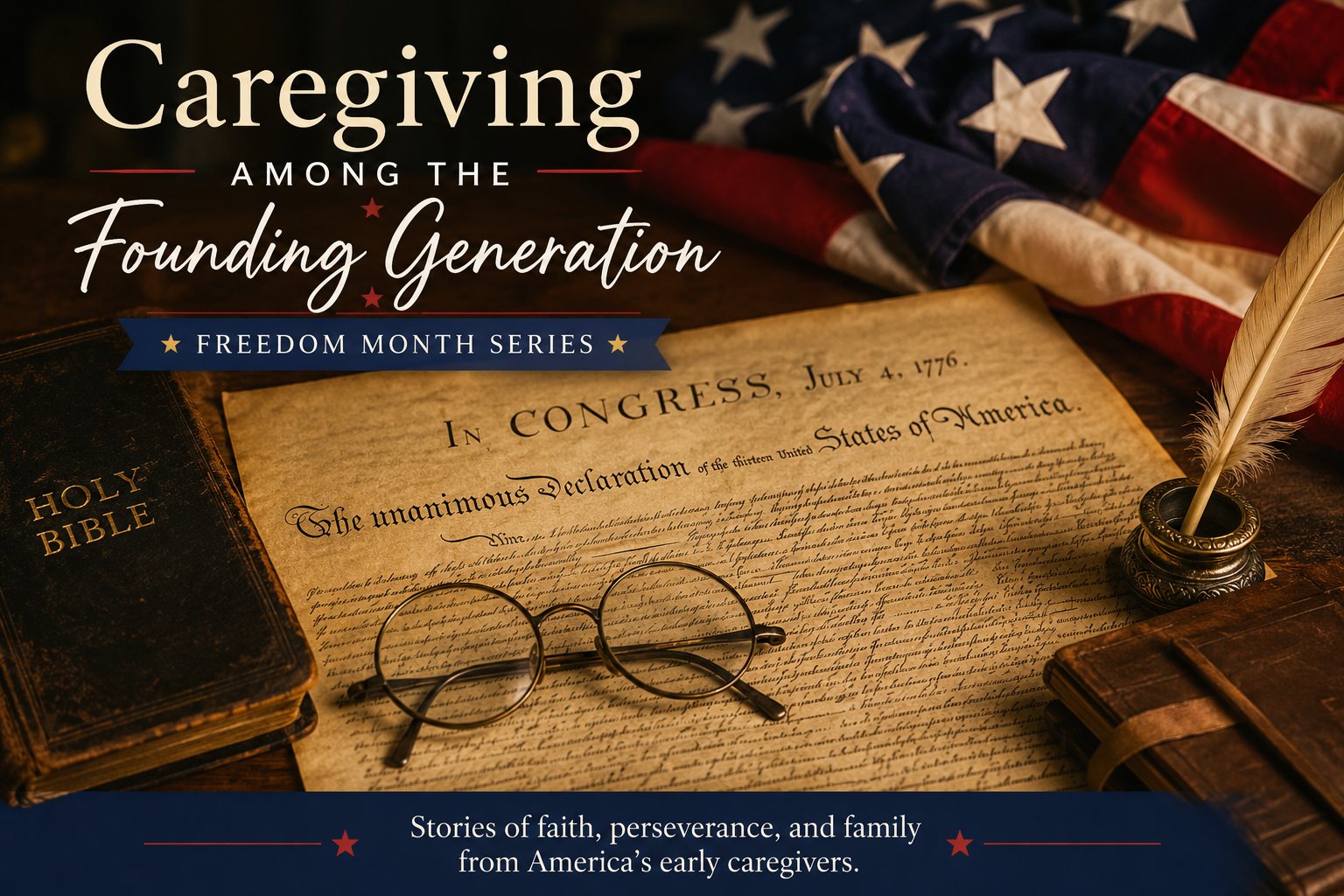
As we continue to celebrate Freedom Month, I found myself wondering, What did caregiving look like during America’s founding years?
What I discovered fascinated me.
Many of the signers of the Declaration of Independence, contributors to the U.S. Constitution, and their families experienced disabilities, chronic illnesses, mental health struggles, and the challenges of aging.
Families living with disability have been part of America’s story since its earliest days.
That realization encouraged me. It reminds us that stress, hardship, illness, and caregiving are not new. They have always been part of the human experience. Yet those challenges did not erase people’s purpose, diminish their potential, or stop God’s providence from unfolding through ordinary families who would help shape an extraordinary nation.
Unlike today, professional care facilities were uncommon. Most care happened at home and was provided by spouses, daughters, older sons, relatives, neighbors, and, tragically, enslaved household members. In many cases, the Founding Fathers themselves also became caregivers.
Here are just a few examples:
- Patrick Henry (Virginia; influential Founding Father and first Governor of Virginia) — Cared for his wife, Sarah, at home during her severe mental health struggles, likely postpartum depression accompanied by violent episodes.
- Stephen Hopkins (Rhode Island; signer of the Declaration of Independence) — Lived with cerebral palsy. He steadied his right hand with his left while signing the Declaration of Independence.
- John Jay (New York; contributor to the Constitution, co-author of The Federalist Papers, and the first Chief Justice of the United States) — Helped care for siblings with disabilities, including two who were blinded by smallpox during childhood.
- Gouverneur Morris (Pennsylvania/New York; delegate to the Constitutional Convention and principal draftsman of the Constitution’s final wording, including “We the People”) — Lived with a severely impaired arm and an amputated leg, using a prosthetic while continuing his public service.
- George Washington (Virginia; Commander of the Continental Army, President of the Constitutional Convention, and first President of the United States) — Experienced caregiving within his own family after his stepdaughter, Patsy, developed epilepsy. Later, he also faced significant health challenges as he aged.
- Thomas Jefferson (Virginia; principal author and signer of the Declaration of Independence, and third President of the United States) — Personally cared for his dying wife, Martha, for months. His family also supported a daughter with developmental disabilities, and Jefferson himself later required assistance because of chronic health conditions.
- James Madison (Virginia; principal architect of the Constitution, signer of the Constitution, and fourth President of the United States) — During a serious illness, he was lovingly cared for by Dolley Madison, who continued supporting him through increasing frailty and rheumatism in his later years.
- Benjamin Franklin (Pennsylvania; signer of the Declaration of Independence, delegate to the Constitutional Convention, and signer of the U.S. Constitution) — Endured severe gout and bladder stones. At age 81, he was often carried in a sedan chair while attending sessions of the Constitutional Convention.
- Caesar Rodney (Delaware; signer of the Declaration of Independence) — Continued serving despite facial cancer and asthma, making his famous ride for independence while seriously ill.
- Thomas Nelson Jr. (Virginia; signer of the Declaration of Independence and Governor of Virginia) — Struggled with gout and declining health following the Revolutionary War.
- William Floyd (New York; signer of the Declaration of Independence) — Cared for his wife, Hannah, through a long and debilitating illness before her death.
- Francis Lewis (New York; signer of the Declaration of Independence) — Partially retired from public life to care for his wife after her imprisonment by the British left her with lifelong health complications.
- Charles Carroll of Carrollton (Maryland; signer of the Declaration of Independence) — His family navigated periods of illness and caregiving, including health challenges experienced by his wife, Catherine Carroll.
- Throughout the founding generation, many families mourned children lost to illness, while Abigail Adams(Massachusetts; wife of President John Adams), Martha Washington (Virginia; wife of George Washington), and Dolley Madison (Virginia; wife of James Madison) frequently served as primary caregivers for their loved ones.
Reading these stories reminded me that caregiving has quietly shaped history.
Behind many of America’s most recognizable names were families carrying heavy responsibilities while still answering God’s call on their lives.
Maybe family caregivers have always been America’s quiet patriots. 🇺🇸
Maybe that’s true for us, too.
Perhaps no one will write our names in a history book, but the love we show, the sacrifices we make, and the faith we hold onto matter just as much.
This Freedom Month, I hope you’ll remember:
Caregiving doesn’t disqualify you from living a full life.
You can still serve.
You can still dream.
You can still grow.
And you can still experience the freedom that comes from walking faithfully through the season God has entrusted to you. ❤️ Really,
Leah
Research note: These historical examples were compiled from conversations with Grok (built by xAI) and Google AI and should be viewed as a starting point for further reading. If you’re interested, explore biographies of these Founding-era figures for additional historical context.


Leave a Reply