Sometimes the most powerful thing a caregiver can do is admit, “I don’t understand—but I trust You.”
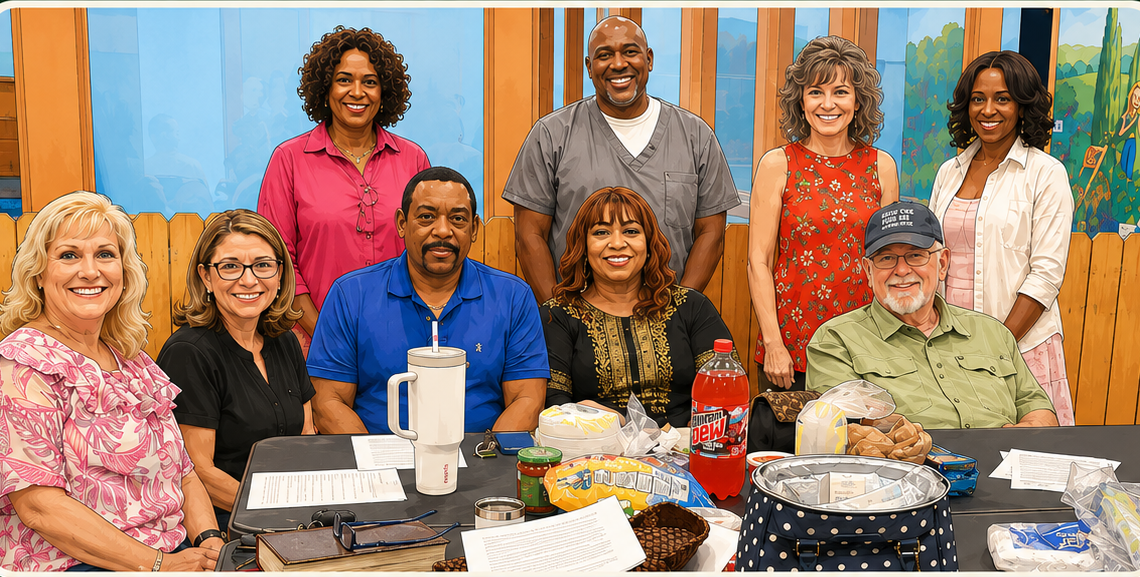
That was one of the messages at the heart of our August 20th family caregivers meeting.
We gathered for an afternoon of what I call Care & Prayer, where group members fellowship, have honest conversations, and find encouragement. Our special guest, Pastor Pam from the MBC Care Department, taught us and led us through an empowering message about trusting God, speaking His Word, and praying in the Holy Spirit.
Now, for non-believers, the topics may appear too heavy, too spiritual, but you could not be farther from the truth. Members unfamiliar with praying to God on their own behalf found inspiration to practice aloud for themselves, their homes, and not only their loved ones. Others had advanced experience of seeing miracles coupled with the reality of waiting for more. There was something for everyone when we allow ourselves to be teachable.
Allow me to share what I find especially eye-opening for all caregivers.
We Don’t Have to Understand Everything
Caregiving often places us in situations we cannot control.
We may not understand why a sickness has happened, why a seizure is happening, or how to manage the daily challenges of caregiving. We may not know what tomorrow will bring and dread the morning. We may pray for healing and still have questions about the process.
Pastor Pam reminded us, from her vast experiences, personally and as a pastor who is on call to visit congregants in crisis, that we don’t have to understand everything before we can trust God.
One affirmation stayed with us:
“I don’t understand, but I trust You.”
And there is freedom in those words.
Trust lets us release the pressure to have every answer when we don’t know everything. It reminds us that our job isn’t to figure everything out. We may feel like the doctor, nurse, and mental health counselor. But those jobs are not ours. Our job is to keep walking, keep believing, and keep trusting God through the process.
Is it often easier said than done?
Absolutely.
But so is anything worth doing.
Speak God’s Word
Another important part of our conversation was the power of speaking Scripture.
Pastor Pam reminded us that Scripture-based declarations are not a magic trick. The declarations build our faith when we hear them and put God’s Word to work. We need to read the Scriptures aloud, too. I believe the vibration of each syllable allows the promise to find a home in our soul.
Scriptures to Speak Aloud
Scripture gives us something to hold onto when circumstances feel overwhelming. They give us the right words to speak for:
- Healing
- Peace
- Provision
- Strength
- Freedom from fear
So, I encourage you to speak Scripture aloud during your prayers.
We also received handouts from Pastor Pam, with Healing Scriptures and Verses About Peace to take home and practice. Practice makes a habit. And for caregivers, prayer can become a practical spiritual discipline.
I encourage all caregivers to find a promise in God’s Word today that speaks to your situation, pray the Scripture, and return to it regularly. (1 Thessalonians 5:17 NLT says to “Never stop praying.” Literally.
Pray When You Don’t Know How to Pray
One of the most memorable parts of our meeting was the encouragement to pray in the Spirit, especially when we don’t know how to pray. Praying in the Spirit is also known as “praying in tongues” and “your prayer language.” We were taught seek God for this spiritual gift if we do not already have one.
The Bible testifies of its power to build faith and do miracles:
Jude 20 reminds believers in Christ to build themselves up in their most holy faith by praying in the Holy Spirit.
Romans 8:11 also reminds us that the same Spirit who raised Jesus from the dead lives in us.
Furthermore, Romans 8:26 says,
“In the same way, the Spirit helps us in our weakness. For we do not know how we ought to pray, but the Spirit Himself intercedes for us with groans too deep for words.
What a powerful truth to carry.
Sometimes the best action to take is to sit in the LORD’s presence and allow the Spirit to lead us.
When Words Are Hard to Find
I’m honest and transparent enough to admit that when I’ve been in pain, many times I was also at a loss for words.
At other times, we have too many words. Too many negative, self-defeating words.
Sometimes we have none.
There is always hope. Even if we haven’t received our heavenly prayer language yet, we can always say, “God, help me.”
We don’t have to have the perfect prayer. We need to keep coming to God.
Caregivers know all about processing, enduring, and allowing patience to have its perfect work.
The Conversation Continued
We are a chatty bunch. Because that’s what group creates—a safe place to find support and friendship. So, after Pastor Pam left, the conversation continued.
We talked honestly about guilt, faith, unbelief, the healing process, the tension around caregiving as believers, and the difference between healing and miracles.
These are not always easy conversations. But caregivers are already equipped to overcome hard tasks.
Why Community Matters
Caregiving can challenge our faith in ways we never anticipated. It can raise questions we don’t have answers for and emotions we don’t always know what to do with. We need places where we can ask questions, share what we’re experiencing, listen to one another, and still walk away encouraged.
That’s why community matters. And God is always the ultimate source. And how do we find Him?
In prayer. In Scripture. In the Spirit.
A Reminder for the Caregiver
Perhaps the greatest takeaway from our time together last week was:
You don’t have to understand everything to trust God.
Truths to Carry Forward
You can be uncertain and still have faith.
You can have questions and still trust.
You can be tired and still pray.
You can be in the middle of the process and still believe that God is present.
Our faith doesn’t require us to pretend that caregiving is easy.
It invites us to remember that we don’t walk through it alone. As my senior pastor says, “We are never alone, and we are never without help.”
Speak. Trust. Receive.
Speak God’s Word.
Trust Him when you don’t understand.
Receive His peace, His presence, and His provision.
As Hebrews 10:23 reminds us:
“Let us hold tightly without wavering to the hope we affirm, for God can be trusted to keep His promise.”
Until our next gathering, when I’ll share what is working in our group, try praying the Scriptures, keep encouraging those around you, and keep walking by faith.
I hope you have found this encouraging today. If so, drop a comment below. I’d be really happy to hear from you.
Word count: approx. 1,000 words / Estimated read time: 4–5 minutes
Leave a Reply